
Meeting the Building Code
Energy Efficiency calculations are required for nearly all new building construction and extensions under the National Construction Code of Australia.
Residential Buildings
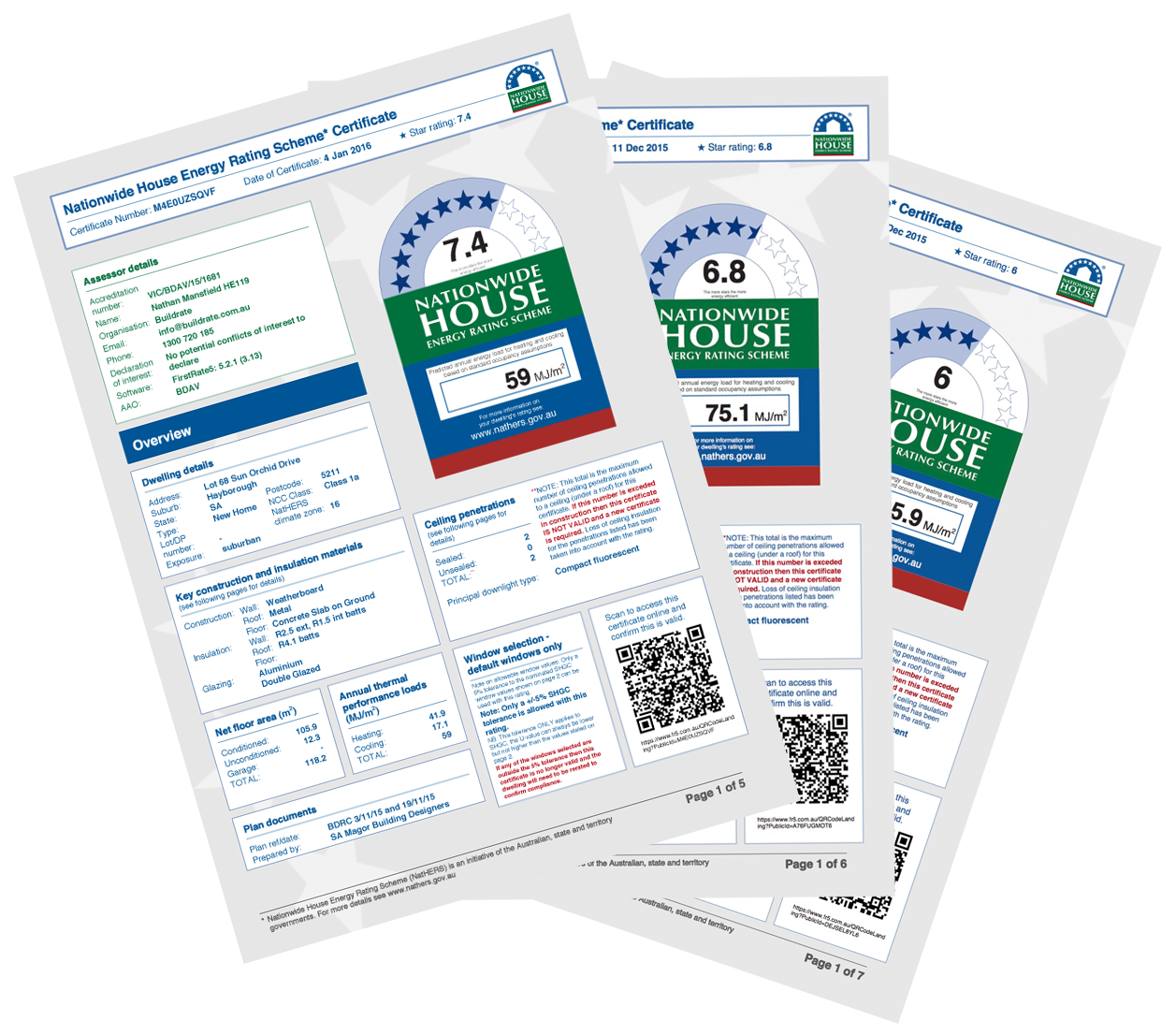
One of the most efficient ways to meet the NCC requirements is to perform an energy rating, and in most states of Australia this thermal calculation is to meet 7 stars for the thermal construction of a building. The thermal
assessment is a rating of up to 10 stars and is based on information about the home’s design, construction materials and the climate where it is being built.
In addition to a Thermal Performance Rating, the assessment is to include a Whole-of-Home Performance Rating to include information about the energy performance of common household appliances, such as heating, cooling,
hot water, lighting, pool/spa pumps and on-site energy generation and storage (e.g. solar panels and batteries).
Commercial Buildings
Commercial buildings are required to meet Section J of the NCC and can be done with a Section J Report or a J1V3 Assessment.
The Advantages
This calculation method gives the overall thermal performance of the building, and can save in construction costs versus using the Deemed to Satisfy method for each component of energy efficiency required within the NCC.
Not only can there be cost savings in construction, but also long term savings for the homeowner by minimising energy usage for heating and cooling all year round. Assessing a building’s thermal performance at design stage can identify simple, economical ways to make it more comfortable and save energy, while also ensuring comfortable and resilient homes for the future.